Prisoners of Geography
PRISONERS OF GEOGRAPHY by TIM MARSHALL
While landscapes may look aesthetically pleasing they also define our way of life. Numerous scholars have sought to highlight this aspect in their works, we have for example the Pulitzer prize winner Guns, Germs and Steel by Jared Diamond and Why the West Rules for Now by Ian Morris. These works within themselves take note of numerous other scholars who have brought this idea of geography as an ever-present and ever influencing force that not only defines how we live now but also dictates the future. One of the comments that Marshall puts forth quite early in the book is that humans unlike other living organisms on earth are able to invent and innovate in order to overcome these "Rules of Geography." Still, Nature has been calling shots for most of human history.
Tim Marshall has divided the book or the globe into ten parts. Three of these are world powers (US, Russia and China) while others are regions where a number of different countries are vying for power and resources producing civil wars or cross border wars. However, Marshall notes correctly that these conflicts are not confined to land and are carried out into high seas by global powers asserting force on each other in International Waters.

Image 1: Conflicts across the globe as of 2015 (Taken from Wikipedia)
Where geography limit human movement and action it also drives it. How it does that? Geography hides within its bosom riches of gold, copper, oil and gas, fertile lands and minerals. These states seek to extract and exploit for their economic growth. States when start growing require ever-increasing quantity of such resources and quality just falls short of the sheer requirement of quantity. States than either get involved in diplomatic relations to acquire these resources or take steps that might endanger other states or steps that could be perceived as hostile and provoke retaliatory action.
However, states are not the only entities competing for land and resources in the world. This topic is aptly addressed in "The New Silk Roads" by Peter Frankopan. Who has shown how groups like the Taliban in Afghanistan have learned that peace deals are in their interest rather than continued conflict. This is because a peace deal will allow them access to resources like gas pipelines coming from countries on the northern border which they can exploit for their own use.
Geographic Demography or Demographic Geography:
Geography highly defines demography as limits the growth of the human population in various regions. This is one of the reasons why agricultural societies on flatland have a higher population as compared to hilly and mountainous regions. However, this geographic demography is often manipulated by states. A group of a certain faith can be pressured to leave an area or inhabit an area in order to disturb the existing demographics and take advantage of the resources there. This has been observed by Russia in Crimea, India in Kashmir, China in Xinjiang in China and many other regions.
Brief Introduction to Chapters:
1. Russia:
The largest country on earth has more land mass than all of Europe combined. Russia draws its influence through its provision of natural gas to Eastern European countries, which is essential in winters. Russia though has been provided with natural resources but is limited in action due to its geographical position. Russian ports are frozen for the better part of the year and allow for minimal movement of ships (Naval and Merchant vessels).
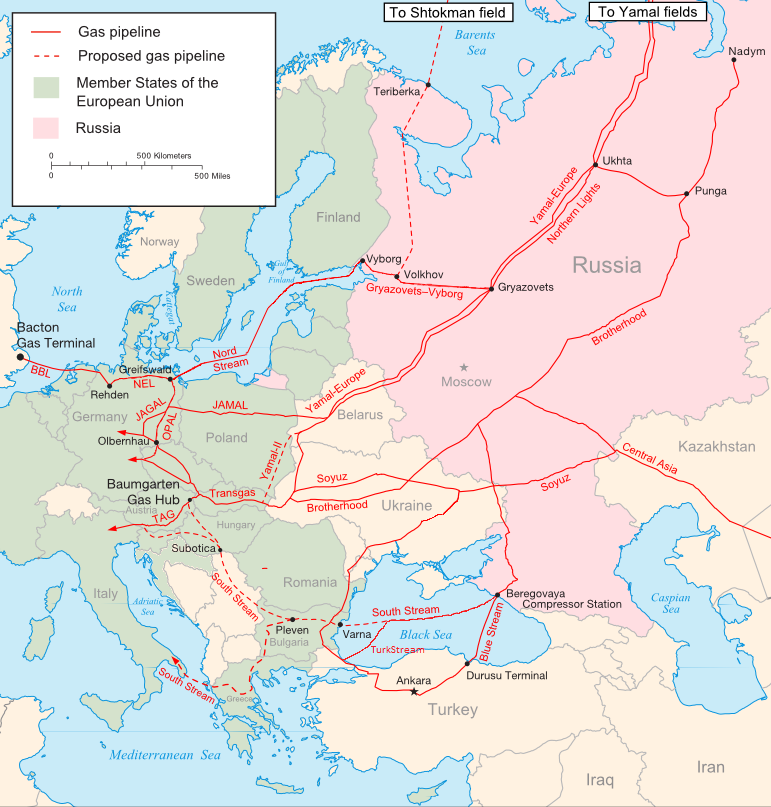
Image 2: Gas Pipelines from Russia to Europe
2. China:
By the time the industrial revolution took place in Europe, Chinese vessels were navigating the world oceans in the 14th century but there is no evidence of them conquering and colonizing other native populations (the reason for which looks more cultural). China was overtaken by the west and come 21st century China is ready to take to the world stage. In recent decades China has been able to conduct successful diplomatic missions across the globe that has allowed China to import resources from Africa, Europe and Latin America. Belt and Road initiative speaks for itself. Chinese have warm water ports along the China sea, in Pakistan and Kenya. Scholars argue that the rise in China's strength is due to "Debt Trap Diplomacy."

Image 3: China's Belt and Road Initiative
3. United States:
After the Second world war, America employed successful diplomacy across Europe to confine USSR. This did pit both superpowers against one another in a cold war from 1947 till the fall of the Soviet Union. The threat of Soviet invasion on Europe (Due to Russia's close proximity) allowed America to acquire military bases in Europe and later in the Middle East and South Asia (Flying U-2 missions from Pakistan over the Soviet Union). This also allowed the United States to build its blue water navy and flex its muscles in Panama, Cuba, Middle East and the Far East. The US was able to extract "Black Gold" from the Middle east till its own Shale Revolution has made it independent of Middle Eastern oil. United State's isolation (Atlantic on the right and Pacific on the left) gives it a great advantage as any major power will have to navigate these expanses in order to invade, however that seems unlikely.
4. Western Europe:
Western Europe is standard within itself. The land where the industrial revolution took place and took the world to a new level of invention and innovation. A lot of its growth is owned to its geography that allowed civilization and trade to flourish and the environment provided shelter from diseases like malaria. Geographic elements like rivers and mountain range provided for empires to develop. However, the Western remains in close proximity with Russia (an ever-present danger). Russia does flex its muscles over the Western European Nations and now specifically that there are signs of a rift in the European Union.
5. Africa:
Africa is the most resource-abundant continent in the world. Estimates state of Africa possessing around 30% of the world's mineral resources. But even in the 21st century and with that much mineral wealth Africa is poor. Marshall describes this as "Almost the entire continent developed in Isolation from the Eurasian landmass, where ideas of technology where ideas of technology were exchanged from east to west, and west to east, but not north to south." Marshall describes how in-navigable rivers became the reason for Africa not developing into a world power. Later on, African people were treated as slaves and their lands were taken by invading imperial powers. Colonizers drew lines for their own sake without any regard for culture and demography that later on became the root cause of continuing civil wars in Africa.
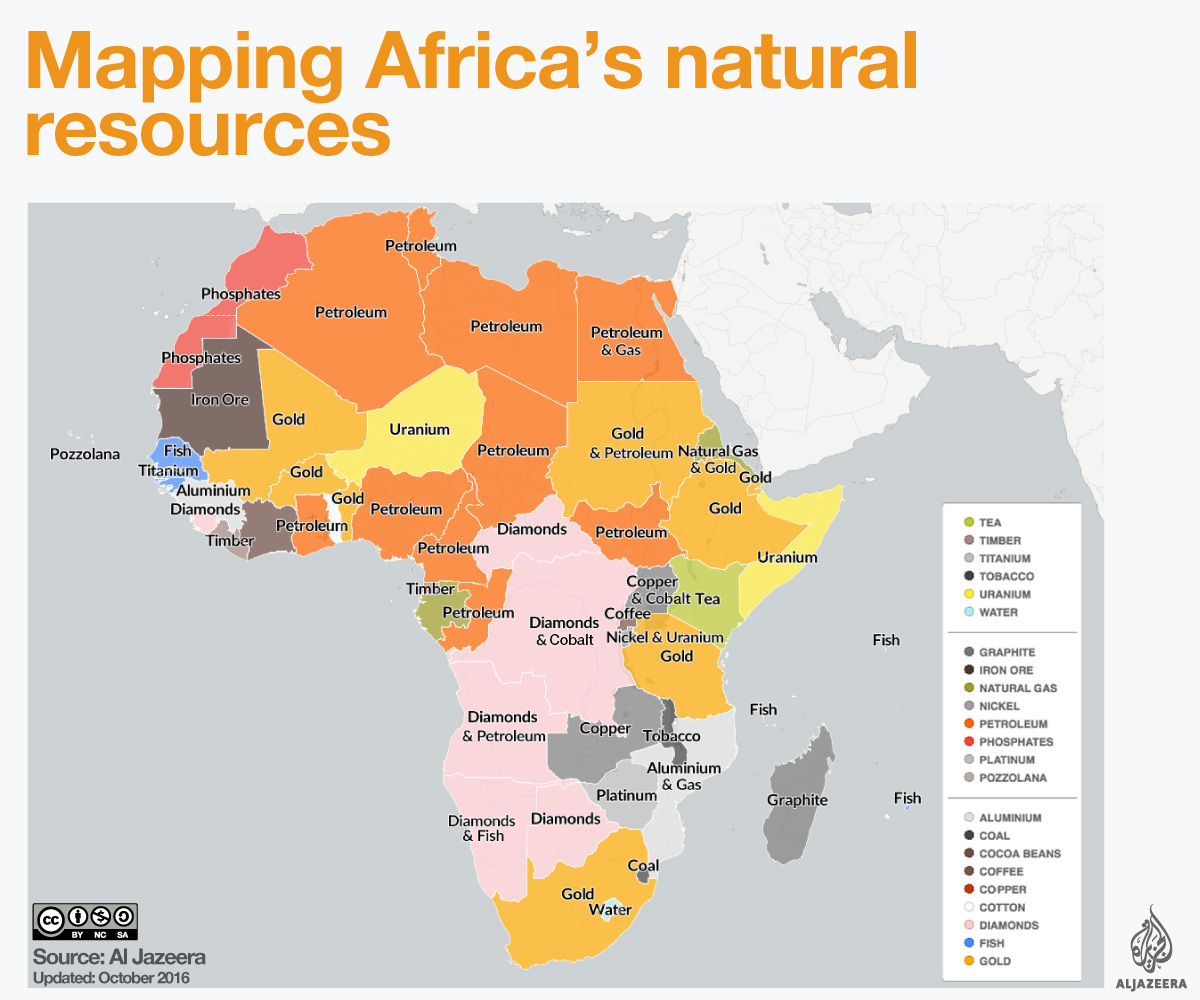
Image 4: Resources in Africa


Comments
Post a Comment